


When to Get Reviews
The best time to start getting reviews is long before the book has gone to print. When you think about it, how else do authors get those nice snippets from reviewers on their back cover, front cover, inside pages, websites and promotional materials prior to the release of their book?
However, reviews are valuable at any time during the life of your book. In fact this should be an on-going process throughout the marketing plan. So pace yourself a little - you will want continued exposure for the long-term. Also, keep in mind that a publication will not likely include a blurb about your book if their direct competitors have just recently done the same thing. Your budget will determine how many copies you can afford to send out for review. So, again, pace your marketing plan.
How to Get Reviews
As always the most essential key is to research the publication you want to query and learn about their readers. The next essential key is to research their submission guidelines. Then you can query the reviewer with a nice letter that includes some basic ideas about the book. Be clear about why the book fits their magazine and their targeted audience at this time. If they feel it does not fit, do not argue. You can always try again, but let several months pass before you query the reviewer again with a new approach.
Always query with a professional informative letter. Books sent without prior communication will just result in yet another book in the trash bin, and that is hard on your budget, use of time and the environment. Queries ensure that they are interested and able to accept more work. It is also necessary to confirm the format they require. The query should relay why your book is going to be something they don't want to miss out on. What is so special about you or your book that will get them to sit up and take notice? THIS is what you need to say, but say it softly. No one likes a loud, pushy or bragging voice.
In addition, it is helpful to prospective reviewers if they know more about your book. Is it a children's book? A religious book? Do you consider the content as humorous or adventurous? Is it a book that will compel feelings of happiness or sadness? Do you have an informative website? What format is the book available to review in at this time -- galley, PDF manuscript or a published review copy? Are you in the manuscript, editing or publishing stage? Do you have an ISBN and a release date? Do you plan to provide other promotional materials (author bio, etc) for reviewers? Are you looking for review blurbs for the back cover or first inside pages of your book? Or are you looking for general reviews for promotion materials and online stores? Are you in a hurry for the review? Provide this information before reviewers are forced to ask. They will appreciate a considerate and prepared author and because of your foresight they will feel valued, respected and will not have to spend time searching for the information.
Most professional reviewers do not usually work with manuscripts. Typically, more than 80% of the books Lillian has reviewed to date were either published copies or Advanced Reader Copies (ARCs), which are manuscripts printed on paper and attached with spiral binding. Occasionally, the publisher will provide ARCs, however the author normally provides these. Some reviewers will work with electronic books; others do not. Be sure to clarify all of these things prior to sending your query letter.
Look at the books on your shelves and see how reviews are used. Through this simple analysis, you can glean information for your own promotional material development as well.
What Happens to the Review Copy?
Most reviewers are not paid for their work. Only a few hard working reviewers are privileged to land a paying position for a publication or online site. Therefore, the book is the payment. Some authors find this worrisome. They are concerned that the reviewer will sell or exchange the book at a used bookstore. It is our opinion that if someone has spent several evenings reading our book, then several more hours writing a review, publishing it, then giving it to us for free and sometimes posting it online for us… well, they can do what they like with our book! When you think about it, if your book is worth $20, they are “earning” less than $5 an hour.
We always include a letter along with review copies that gently reminds them of our conversation in the past and requests a notification of the book's arrival and their decision on it. We suggest that if the book is not destined for their own bookshelves, that they consider donating it to a library, school, mission for the poor or women's shelter. We even had responses where the contact was thrilled that we had considered this as they have been throwing rejected review copies (usually unsolicited) away in the past. Perhaps this small suggestion will help keep other authors' books out of their trash bin as well. However, the main goal is not waste reduction or community good will in this scenario - instead, the idea is to keep your book in circulation, continually building exposure and extending the value of your marketing budget.
Be Selective
Be very selective when querying reviewers. Make sure you have visited their website and are familiar with their style and preferences. We recommend reading the article: "How to spot a phony reviewer" at http://www.midwestbookreview.com which will help you avoid some pit falls.
Publication Lead-Times
If you are trying to get into a pre-publication magazine like Publisher's Weekly, you are looking at a three to four month lead-time. This means you need to submit the book to one of their reviewers about three or four months before the deadline date.
These kinds of publications often require ARCs or Galleys because they only review books prior to their publication. Unless your publisher provides these you will need to print out the manuscript and send it with the other promotion materials. These pre-publication magazines are published for wholesalers, larger bookstores, distributors and libraries. Some are targeted towards a specific audience, while others are more general.
…And one final tip we’d like to leave you with today is that being reviewed online (e-newsletters, review sites and e-zines) is often easier than getting printed reviews in newspapers, newsletters and magazines.
This post excerpted from Chapter 3 of the book: Purple Snowflake Marketing – How to Make Your Book Stand Out in a Crowd, by Dave & Lillian Brummet
~ Lillian Brummet: Award winning author, book marketing guru, owner of the award winning Brummet’s Conscious Blog, and both the host and executive producer of the Conscious Discussions Talk Radio show. (www.brummet.ca)
Thursday, March 31, 2011


Thursday, March 24, 2011
Questions About the Roles of an Editor
This post was written by forensic scientist Chad L., whose interest in writing began after he took multiple writing courses online.
1. Do you get many unsolicited enquires? And do you respond to them?
We receive many, many unsolicited inquiries every day. Our interns go through the mail and at least skim over anything we get, though if no SASE was included, they've been instructed not to even look at it. The interns send form rejection letters back to the vast majority of submitters unless they see anything of note, and then they direct to me or my staff.
2. Do you have busier months than others?
It's usually a pretty steady stream of work, though for whatever reason we may have busier months than others, usually around the times of certain projects coming to fruition or being published. It can get overwhelming, but it never hits a snail's pace.
3. When publishing houses say their “lists are full” what exactly does that mean?
Literally: we're not taking on any more works, authors, projects, etc. But really, we're just not going to add your work to the list.
4. What is a closed house?
A publishing house that only works with certain writers and is not currently looking to taking on more writers; one whose lists are actually, truly full.
5. How close do you work with writers?
Depends on the project but usually fairly closely, but only until after they've written a rough draft. Then it comes time to put in the real work and make some cuts and changes, which can lead to some tension. It's my job to make their work the best it can be but also the most accessible and engaging that it can be.
6. Who gets the final word in what goes in the novel (in editing terms) the editor or the writer?
Almost always the editor and the publisher. We're the ones putting up the money to get it published!
7. How do you get to become an editor? Any formal qualifications?
You have to be a very skilled writer and put in your work to know the publishing industry inside-out, and that only comes with time and experience.
8. How do you deal with overly-sensitive writers who question every edit you make, even when your edits are clearly within the specified corporate style?
Every writer is sensitive about changes being made to their works, some more so than others. Usually if you explain the reasoning behind their edits they'll understand and at the very least grudgingly accept your call. Otherwise, you deal with it if they're worth the time i.e. if their writing is that good. Otherwise, you don't work with them in the future.
9. Is the editor used to being the decision maker or used to deferring to the author's decision?
You have to be a decision maker; it's your job. To make the right calls for who you represent and to optimize the work presented by the writer to reach the widest audience and earn the most interest. That's the whole idea here.
Thursday, March 17, 2011
Slush Pile Heroes: Authors Who Faced Rejection (and Triumphed)
By: James R., a radiology technician who has written about the steps towards earning a Christian counseling degree. His favorite novel is "White Teeth."
For new writers, submitting work to be published can be an exercise in self-esteem maintenance. Everyone will warn you, but there’s really no way to prepare yourself for that first rejection letter, or worse, no response at all. Take a look at history, though, and you’ll see that initial rejection (or say, 22 years of it, in the case of Gertrude Stein), isn’t any indicator of future success, or skill, for that matter. So chin up, my as-yet-to-published cohorts. Pop your antidepressant of choice, shut the blinds, and get back to writing. Someday you could be as esteemed as these 5 rejected authors.
James Joyce: While hundreds of undergrad English majors might be happy if this notoriously obscure author had floundered into the literary abyss, they aren’t so lucky. Joyce unsuccessfully tried to get his first novel, Stephen Hero, published, and was so dismayed at the rejection that he didn’t touch the thing for years. Later on, he decided to revise the book, and turned it into today’s literary classic A Portrait of the Artist as a Young Man.
John Grisham: You can’t walk into a grocery story on any given day without seeing a new Grisham novel amongst the reading material at the checkout. This prolific writer of legal thrillers didn’t have an easy start, though. His first book, A Time to Kill, was rejected by all of 28 publishers, before a small-time press decided to give it a measly 5,000 copy run. Dozens of novels and a few film adaptations later, Grisham is now one of the most popular writers out there.
Vladimir Nabokov: Oh, I long for the days when rejection letters were heartfelt, personalized letters of rebuke, rather than today’s boilerplate thanks-but-no. Take one of the rejection letters sent to Nabokov after he tried to get Lolita published: “It is overwhelmingly nauseating, even to an enlightened Freudian…I recommend that it be buried under a stone for a thousand years.” Five major publishers passed up a book which is now regularly listed as one of the best works of modern literature. Let’s all keep this in mind, as we pen our own novels about middle-aged men sexually obsessed with tween girls.
J.K. Rowling: If you haven’t heard the lore about the welfare-drawing single mom J.K. Rowling writing Harry Potter in her local coffee shop, you’ve somehow found a way to block out all vestiges of pop culture. What’s your secret? In all seriousness though, Rowling’s story is pretty inspiring. Twelve publishers passed up the first installation in the youth-wizardry saga, Harry Potter and the Sorcerer’s Stone. You know the rest of the story: Rowling goes on to write seven Potter tales, we watch the chubby kids from the movie adaptations grow up into hot 20-somethings. And, Rowling is now a billionaire, and richer than the queen.
Agatha Christie: Who didn’t read And Then There Were None in 10th grade English and realize that this Dame and the mystery genre were in fact, awesome? Or maybe you read one of her 80 other detective novels. It’s likely, since only the holy word of God has sold more copies than Christie’s roughly 4 billion. Several publishers relegated her first attempted novel, Snow Upon the Desert, to the slush pile, however. She even had trouble finding an agent who would represent her. Thankfully, she didn’t give up, and went on to publish enough books to fill all the used book stores in the world from now until eternity, or at least until we’re all living in global-warming-proof floating cities.
Saturday, March 12, 2011
How to Write Fiction Books--Really!
The process of publishing a fiction or non-fiction book follows basically the same guidelines. However, the composition of the two can be very different. As many of you are aware, I am a non-fiction writer and multi-genre book publisher. To date, my attempts at fiction writing have been “limited” to say the least. But of recent, I have reconsidered. Why? I think I may have found the instructor I need to complete my great story (which has been inside my head for years!).
A few weeks ago, I was contacted by Writer’s Digest, a division F+W Media, Inc. and asked if I would review one of their upcoming releases. Yes, they also publish books. To put it mildly, I was honored; don’t we all love Writer’s Digest? I accepted of course.
I receive so many requests from writers of fiction seeking advice on how to develop characters, plots, and organize their story, and frankly speaking, I don’t know what to tell them! I’m simply not a fiction writer—not yet anyway.

I don’t often recommend books to my Blog visitors (except my own of course), but I read The Breakout Novelist: Craft and Strategies for Career Fiction Writers by seasoned author Donald Maass, and I must admit, it hyped up my interest in making another attempt at my book idea—my fiction book. It may just do the same for you.
Fiction writers who have the “advantage” are often the ones who are most capable of working through their story without losing direction and focus. How do you develop interesting characters? How do you keep the reader’s attention? Where will you find an agent? How will you write your query letter? All difficult questions answered in simple English by author Donald Maass. The Breakout Novelist is an important addition to the personal library of all writers, new and seasoned.
About the Author:
Donald Maass heads the Donald Maass Literary Agency in New York City, which represents more than 150 novelists and sells more than 150 novels every year to publishers in America and overseas. He is a past president of the Association of Authors Representatives, Inc., and is the author of several books of interest to fiction writers: The Career Novelist (now available as a free download from his agency’s Web site), Writing the Breakout Novel, and Writing the Breakout Novel Workbook. His website is www.maassagency.com. He can also be found on Facebook and on Twitter @DonniMaass.
Get your copy at Amazon.com/The Breakout Novelist or wherever fine books are sold; you won’t be sorry. The Breakout Novelist: Craft and Strategies for Career Fiction Writers
I’ll certainly let you know when I’m ready to release my first fiction novel!
Tuesday, March 8, 2011
Permission to Use Copyrighted Material for Your Book
It is crucial that when composing your book, or any printed material you include somebody else's writing in, you obtain permission to re-print material copyrighted by another person or agency. A rule of thumb is never copy more than three words in sequence of another person’s work (copyright infringement). If you want to use someone else’s work word-for-word as part of your book, such as a quote or research document, you will need written permission from that person or the publisher.
Your written request should include the original authors name, title and copyright date of the work, a page number or reference site of the work, and exactly what part in total you are requesting to use. You can condense this information into a letter form, but be very specific on all details of their work. Include your name, contact information, and what you plan to use their work in conjunction with, i.e., your book title. Offer to give them credit in the book and source their name and work on the page where the work will be included. Use the following as a guideline for your request letter.
From: John Author
111 Book Writer Rd
Publishtown, USA 00799
J.author@copyright.com
To: Mr. Expert,
I am writing a book tentatively titled, “John Writes a Book.” I would like your permission to include the excerpts as described below in any and all editions of the book for worldwide distribution, and in all promoting and free and paid advertizing.
In exchange for your permission, you will be listed in my Acknowledgments, names and titles index (if included in your book), and sources on the page the excerpts appear. (Optional additon…) I will also send you a copy of the finished book.
I hope you will agree to give your quality work greater exposure.
For your convenience, enclosed are a self-addressed stamped envelope and a copy of this letter for your records.
Sincerely grateful,
John Author
Material to be reprinted: Excerpts from the book “The Way is to Write.” Page 222, section begins with “Only you can write a book.” Ends with, “Are you a good writer.” Total 17 lines. Copyright date: 2001
Permission granted by:_________________________________Date____________
Permission denied by__________________________________Date_____________
The internet has made an easier job of locating people. Use the search engines to locate writers and professionals for permission. If that fails, contact the publisher of the work. If you can’t obtain permission, don’t use it.
For more book writing help, read A Book Inside, How to Write, Publish, and Sell Your Story, available in all formats at Amazon.com or wherever fine books are sold.
Pweez Tweet Me!
Wednesday, March 2, 2011
Why Yvonne Perry Wrote a Book for Empaths

I’m celebrating the release of Yvonne Perry’s new book that I believe many people will find helpful. Whose Stuff Is This? Finding Freedom from the Thoughts, Feelings, and Energy of Those Around You (WhoseStuffIsThis.com) is a guidebook to help energy-sensitive people who exercise so much empathy toward others that they cause themselves emotional, mental, and physical distress. Whose Stuff Is This? teaches these intuitively-gifted people how to manage energy overload and recover from empathy fatigue.

Yesterday, Yvonne visited Beyond Words Radio Show on Believe in the Moment radio station where she was interviewed by Joanne Sprott. Today, she is my guest blogger as she answers some questions posed to her. You may have questions of your own to ask her. She will be coming by this blog several times today, so be sure to ask your question by using the comment feature under this blog post.
QUESTION: Why did you write this book for empaths?
YVONNE: Like most empathic people, I have always wanted to help others avoid suffering. As strange as this may sound, the one way empaths do this is by taking on the problems of others and suffering on their behalf—kind of like a surrogate for affliction. The other person feels better, but the empath feels horrible. This is done in ignorance. Empaths have no idea why they feel so bad or have such emotional mood swings so much of the time. Many are diagnosed as bipolar or having some other mental illness. Medication is often prescribed rather than dealing with the underlying cause, which is energy-related.
This is not just an isolated problem; many compassionate people, who do not understand how to set energetic boundaries, pick up energy, emotions, feelings, and illness from their environment and the collective unconscious. Over the past ten years, I’ve researched and tried all kinds of things to alleviate empathy fatigue—not really knowing the term for the kind of “backlash” I was dealing with. I knew it was spiritually related because when I prayed for others, many times they got well and I began to feel whatever discomfort they had been struggling with.
Thankfully, I found herbal remedies, as well as visualizations, meditations, prayers, etc., that brought me to a path of emotional maturity (using the gift of empathy wisely without paying a personal price). It occurred to me last summer that I needed to share what I had learned. Since writing is my forte, I started writing my blog (http://weareoneinspirit.com) about some of the spiritual practices and protection tips that I use to keep my energy field clear and balance my chakras.
It wasn’t until a psychotherapist friend of mine, Dr. Caron Goode, suggested I write a book that I decided to gather all this information into a guidebook that could be used by the millions of energy-sensitive people out there to set boundaries and manage the overload of energy they pick up. We both feel the time is right and there is a need for the material. She provided insight on the psychological aspect of empathy and I wrote about my personal journey through the empath wilderness and how I learned to psychically protect myself as I moved toward wholeness.
With more than two dozen proven and effective ways to clear your energy field of external clutter, this guide employs empowering, proactive techniques to manage your personal energy. The book contains a list of resources that includes books, classes and groups, practitioners, quizzes and tests, radio shows, videos, CDs, and DVDs to help empaths take the next step in developing their intuition.
QUESTION: How long did it take you to write this book?
YVONNE: I started gathering information and interviewing both mature and untrained empaths in July 2010. The first draft was ready by the end of December. It took another month to edit and proofread the book, garner endorsements, get the cover designed, and the interior formatted for print. The e-book version was published in Amazon’s Kindle Store on January 21, 2011. So, from idea stage to public presentation, it took about seven months.
QUESTION: What other books have you written?
YVONNE: The Sid Series ~ A Collection of Holistic Stories for Children was inspired by my grandson, Sidney, who started demonstrating spiritual gifts at an early age. I was concerned that he might also be an empath, and I wanted him, and others kids like him, to avoid the needless suffering I had endured. It turns out that he is an example to me about how effortlessly this gift can flow through a person without causing turmoil. He is very intuitive. As a toddler he was clairvoyant (seeing in the spirit realm), but as he matured, he began getting psychic information through dreams. He still hears in the spirit realm. The Sid Series is a collection of stories that emerged during the adventures Sidney and had together, but they deal with topics most adults tend to avoid with children: death, afterlife, ghosts, healing, racial diversity, caring for others, meditation, and spiritual insight. The book is about entertaining children, but it also teaches parents how to open a mature dialogue with them. http://theSidSeries.com
Another book I wrote is More Than Meets the Eye, True Stories About Death, Dying, and Afterlife (http://deathdyingafterlife.com). This book is designed to provide comfort for those who are dying, as well as for the caregivers and family who are left with questions when their loved one passes. When I wrote that book, I had a lot of disembodied spirits coming to me. I didn’t know why ghosts were visiting me, but I felt I was supposed to help them. Writing that book helped me find answers not only to know what the ghosts needed, but for protecting my energy field as an empath.
QUESTION: In addition to writing your own books and carrying out your spiritual mission, you are a freelance writer, who ghostwrites and edits for clients. What is Writers in the Sky all about?
YVONNE: Writers in the Sky Creative Writing Services (WITS) is a network of freelance writers, ghostwriters, and proofreaders. My team and I provide writing, editing, and proofreading for books of all genres as well as articles, bios, resumes, Web text, and business documents. I only write for clients in the metaphysical/spiritual, self-help, and health/healing genres. See writersinthesky.com for details.
QUESTION: Where can we find you online?
YVONNE: weare1inspirit.com or WhoseStuffIsThis.com are my spiritual Web sites.
LinkedIn: http://www.linkedin.com/in/yvonneperry
I’m on Twitter as @WeR1NSpirit and @Writersinthesky, or you can check out my Facebook pages:
We Are One in Spirit
Kids Who See Ghosts
Writing and Editing
Come along on the virtual tour with us. Tomorrow’s blog stop will be at Positively Present. See the entire tour schedule at http://tinyurl.com/EmpathTour.
Tuesday, February 22, 2011
More on Kindle—a .99 Experiment
I recently read a Blog post on pricing your book for Kindle sales and I’ve decided to try an experiment. My books sell “pretty good” on Kindle and I’m “satisfied” with the results I’ve seen. But after consulting with another author who also has her books listed, I’ve decided to drop my Kindle books to 99 cents each for one month. See a list of my books with their links to Kindle in the left column of this Blog page.
For 15 years I ran a small business in California. My theory was, if I marketed quality service along with a great product at the lowest price possible, I would excel above other businesses in my field—it worked. At age 42, I was able to sell the business and retire. Not a bad deal!
Now I’m not insinuating that by lowering my book prices to 99 cents I will become a millionaire, but if I presently sell only 20 books a month at $4.99, wouldn’t I be better off selling 200 books at 99 cents? The nice thing about e-books is that there are no additional expenses related to the sale (printing, shipping, etc.) and no real risk on my my part.
So this will be my experiment with Kindle and I will be sure to let you all know how successful it is. And if you’ve ever wanted to read any of my books, and you have a Kindle Reader, get them now, because I have a funny feeling I’ll be re-setting the price tag next month—but we’ll wait and see!
Monday, February 14, 2011
Okay Kindle, I’m sorry!
Happy Valentine's Day!
A while back, I wrote how upset and disappointed I was with Amazon Kindle for posting a poor review based on the page layout of one of my books. As many of you know, it’s hard to prepare your file for Kindle upload, and the first time I tried, I loaded the file without locking in the fonts. Like a dingbat, I didn’t check it after uploading. Well sure enough, before I could correct this, someone downloaded a “sample” of the book and saw the mess this creates in viewing. The uppercase are changed to lower, comas become little square blocks, and so on. Rather than assuming, in a book on writing, this was an obvious mistake, the man posted a very negative review of the book, i.e., “This writer can’t even use capitol letters, she shouldn’t be writing a book on writing.” Of course, after repairing the file, I wrote to Kindle and requested they remove the poor review—they declined—that’s why I was angry with them.
Since that time, my audience has grown and the reviews are good. Kindle sales are back up where they should be. The bad review is still there, but I think most now realize it was an error (and an idiot who wrote it). So I’m here to say, “I’m sorry Kindle.”
Kindle is hot, and authors need to make sure they have their books listed. But beware, if you do not lock in your fonts, they will appear tangled and unreadable. Here’s how to do it in a Word Doc:
*Open your book file.
*Go to “Print” or any of your file buttons in your option bar.
*At the bottom of the box, click on “Word Options.”
*Click on “Save” in the menu bar.
*Check the box “Embed Fonts in The File.”
*Check both boxes’ below that one as well.
So I am proud to say, I have now uploaded all my books into Kindle. I have also converted all my e-books into paperbacks. So I’m covered. On the left column of this Blog page, you will see a list of all my books and the links for each of them in all formats—celebrate!—I think I’ve made the big time! Now I’ve been told I need to go over to B & N and upload again in some reader called the “Nook???” What the hey? When will this end?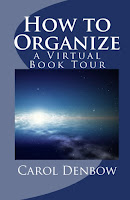
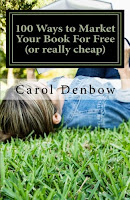
In addition, when I converted my e-books to Kindle as well as paperbacks, I changed my e-book cover images. I would love you opinions on them—be kind, I’m fragile!
A while back, I wrote how upset and disappointed I was with Amazon Kindle for posting a poor review based on the page layout of one of my books. As many of you know, it’s hard to prepare your file for Kindle upload, and the first time I tried, I loaded the file without locking in the fonts. Like a dingbat, I didn’t check it after uploading. Well sure enough, before I could correct this, someone downloaded a “sample” of the book and saw the mess this creates in viewing. The uppercase are changed to lower, comas become little square blocks, and so on. Rather than assuming, in a book on writing, this was an obvious mistake, the man posted a very negative review of the book, i.e., “This writer can’t even use capitol letters, she shouldn’t be writing a book on writing.” Of course, after repairing the file, I wrote to Kindle and requested they remove the poor review—they declined—that’s why I was angry with them.
Since that time, my audience has grown and the reviews are good. Kindle sales are back up where they should be. The bad review is still there, but I think most now realize it was an error (and an idiot who wrote it). So I’m here to say, “I’m sorry Kindle.”
Kindle is hot, and authors need to make sure they have their books listed. But beware, if you do not lock in your fonts, they will appear tangled and unreadable. Here’s how to do it in a Word Doc:
*Open your book file.
*Go to “Print” or any of your file buttons in your option bar.
*At the bottom of the box, click on “Word Options.”
*Click on “Save” in the menu bar.
*Check the box “Embed Fonts in The File.”
*Check both boxes’ below that one as well.
So I am proud to say, I have now uploaded all my books into Kindle. I have also converted all my e-books into paperbacks. So I’m covered. On the left column of this Blog page, you will see a list of all my books and the links for each of them in all formats—celebrate!—I think I’ve made the big time! Now I’ve been told I need to go over to B & N and upload again in some reader called the “Nook???” What the hey? When will this end?


In addition, when I converted my e-books to Kindle as well as paperbacks, I changed my e-book cover images. I would love you opinions on them—be kind, I’m fragile!
Monday, February 7, 2011
What is a Fair Royalty Percentage?
When a new author sees the seemingly low royalty they might receive from their publisher, it is often shocking to them to say the least. Why are these numbers so low? In this post, I’ll attempt to break it down for you and make sense of it all.
Five percent, seven percent, ten percent; not much money when you add it up. But consider the following expenses that go into simple production of the book alone.
Editing; even if the book submitted has been previously edited, it must still be reviewed.
Layout; another very time-consuming process which also requires significant hours of labor.
Cover design; again, a special talent and time invested.
ISBN’s and other costly insertions and necessities to publish for distribution.
Printing; a publisher rarely prints their books; they are sent to an outside source. Cost? 30 or more percent of the cover price (which is based on page count, size, cover, etc.).
Promoting your book can be costly as well. So when you add it all up, the publisher has a significant investment in your book. Considering the average author sells only 120 copies, the publisher is taking a huge gamble on you.
Publishers are becoming more and more like brick and mortar book stores; they’re closing down faster than ever before. There is just too much competition out there and they are overwhelmed.
When a writer makes a decision to self-publish, they are taking on the same risk a traditional publisher does. They will make the timely and financial investment in their book and gamble that it will sell. Yes, they will make more profit on the book, but will first need to recoup their investment; something more than 90 percent never succeed in doing.
When I self-published my first book, Are You Ready to be Your Own Boss? in 2006, I did it all myself from start to finish. I thought, “Who wouldn’t want to read this book?” So I printed 2,000 copies. Well truth is, many people did want the book, and still do. But what is “many?” Unfortunately, it wasn’t 2,000. So now I still have about 700 books sitting in my closet. The good news is, I’ve finally broke even. My initial investment was well over $5,000.00. I’ve learned a lot since then and that mistake has never re-occurred.
Remember that five, seven, or ten percent royalty? Maybe it doesn’t sound too bad after all. If it’s pure profit, whether you sell 120 copies or ten thousand copies, you won’t show a loss, and there is a lot to be gained by that.
For “author assisted” free book publishing, visit Plain & Simple Books at http://www.plainandsimplebooks.com.
Sunday, January 23, 2011
20 Acclaimed Authors and Their Unique Writing Rituals

Most literary types agree that a definitive, personalized ritual performed before, during or after a writing session forms one of the absolutely essential components of creating innovative, effective works. These obviously vary from author to author, and even similar methods come with their own unique variances. Regardless of whether or not one hopes to pen a future Pulitzer winner or simply finish his or her homework, forging a comfortable writing routine serves as an excellent means of bolstering creativity, relaxing, clearing the mind and — most importantly — encouraging productivity. While some of the following strategies may not exactly work for everyone, they still provide a keen insight into some of the literary sphere's most notable, impressive minds.
1. Victor Hugo let it all hang out: According to The New Yorker, the celebrated author of Les Miserables and The Hunchback of Notre Dame forced himself to write and stave off procrastination by stripping down. His valet was instructed to find the sneakiest hiding place possible and place his clothing inside. Hugo hoped this ritual would prevent him from leaving home and encourage tighter focus on the task at hand.
2. C.S. Lewis kept a tight schedule: When it came to writing his beloved novels, essays and novel-length philosophical works, C.S. Lewis kept an incredibly obsessive schedule. He allowed himself short, periodic breaks, but otherwise planned every minute of every day in order to maximize productivity. A rigid series of rules dictated everything from appropriate times to take a beer to when visitors were allowed to stop over.
3. Benjamin Franklin got wet: Though not fully verified, many believe the famous American statesman was the first to import a bathtub into the United States. A consummate inventor, Benjamin Franklin appreciated and studied it as a marvel of engineering and innovation, but the lovely bit of porcelain provided him with more than just a piqued scientific curiosity. When it came time to read and write, much of the Renaissance man's time was spent soaking in a leisurely bath.
4. Haruki Murakami stays healthy: Much like C.S. Lewis, the celebrated Wind-Up Bird Chronicles and Norwegian Wood scribe keeps himself creative by staying on a stringent schedule. Haruki Murakami's afternoons are devoted to keeping his body as healthy, active and fit as his mind. Exercise involves a 10-kilometer run, a 1500-meter swim or some combination of both. Such a ritual, he claims, grants him the mental clarity and physical stamina to hammer out thick novels.
5. William Wordsworth consulted man's best friend: Great English Romantic poet William Wordsworth composed several odes to his faithful canine companion. Though anecdotal, some think the Poet Laureate would write while taking regular constitutions with the dog in tow. He would recite ideas out loud, and any met with barking or agitation was taken as a sign that revision was necessary.
6. W.B. Yeats went on autopilot: Along with his wife George, the renowned Irish poet and playwright found inspiration in the mystic arts, infusing them into more than just his works' content. Though the process of automatic writing understandably dredges up its fair share of skepticism and scrutiny, W.B. Yeats employed it in earnest. The controversial procedure involves giving in to the subconscious (or, for the more mystic-minded, the spiritual realm) and immediately writing down whatever comes to mind. No revisions, no pausing to think. Just the simple act of putting pen to paper and letting creativity flow.
7. Vladimir Nabokov just couldn't sit down: While writing the classic Lolita (and other works, of course), author Vladimir Nabokov launched into the day's work standing up. His study boasted a "lovely old-fashioned lectern" of which he was very proud, and he greatly preferred starting from there than his armchair or desk. However, Nabokov did admit that his legs did grow tired in such a position, but only then would he retire to one of the comparatively more leisurely options. He also preferred index cards to notebooks and legal pads, as their structure allowed him to easily move scenes around as he saw fit.
8. Toni Morrison can't see the light: As the mother of three children, this Nobel and Pulitzer-winning author didn't always have the time to sit down and write. Toni Morrison eventually disciplined herself to wake up before dawn, brew up a strong, delicious pot of coffee and get productive. Even after her kids grew up and moved out, she continued on in the exact same pattern. Watching the sun rise is an added perk that stimulates her imagination.
9. Philip Roth stays on his feet: Standing burns many more calories than sitting, and decorated author Philip Roth — much like Vladimir Nabokov — prefers this physical calibration when writing. In addition to this healthy habit, he also pushes himself to walk half a mile for every page he completes. Despite age starting to plague his body, Roth continues this ritual to benefit both body and mind. As with Haruki Murakami, he believes that clarity and creativity come when all facets of a person operate in peak condition.
10. Gertrude Stein indulged in Godiva: Allegedly, the modernist maven and pivotal figure in the "lost generation" of creative American expats after World War I frequently took to her car when inspiration struck. She would park her Ford, famously nicknamed "Godiva," somewhere and begin firing off poetry while staying put in the driver's seat. Something about the vehicle inspired Gertrude Stein and provided a space conducive to her legendary creativity and literary innovation.
11. George Sand got down to business: Amantine Aurore Lucile Dupin, who wrote under the pen name of George Sand, participated in a nearly two-year affair with fellow literati member Alfred de Musset. Apparently, their sexual escapades charged her up to the point she'd move straight from bed to desk after finishing a session. de Musset himself found this boundless energy highly impressive.
12. Truman Capote got horizontal: Regardless of whether or not he used a typewriter or decided to go longhand, the author of such notable works as In Cold Blood and Breakfast at Tiffany's opted to write from either his comfortable bed or cozy couch. He proudly referred to himself as "a horizontal writer," and often took tea, coffee or drinks while in repose as well. Capote's first two drafts were usually written out by hand, then switched to a typewriter for the third.
13. T.S. Eliot let it all go to his head: T.S. Eliot didn't go so far as to purposely infect himself with colds, but he was probably one of the only people on the planet to ever welcome them. He found that writing while so afflicted greatly helped him concoct unique, gruff voices either for different characters or in the creation of harsher scenes.
14. Alexandre Dumas kept the doctor away: Like Toni Morrison, Alexandre Dumas of The Three Musketeers and The Count of Monte Cristo fame enjoyed rising early and greeting the day with a personalized ritual. Rather than enjoying a piping hot cup of coffee, however, he preferred taking an apple to the Arc de Triomphe. At 7 AM every morning, Dumas noshed his nourishing breakfast and watched the people of Paris tend to their own unique routines.
15. Honore de Balzac gave himself the jitters.: Any discussions regarding the renowned writer's legendary coffee consumption posit his daily intake anywhere from 50 to 300 cups a day. No doubt he certainly consumed more than most people — Honore de Balzac infamously died of health problems related to caffeine poisoning — but many of the estimates are more than a little arbitrary. Turkish and Parisian blends particularly piqued his fancy, providing him with enough fuel to keep him writing throughout the evening and on into the night.
16. Henrik Ibsen made war, not love: Playwright Henrick Ibsen, famous for his progressive values in works such as A Doll's House, really knew how to keep his enemies closer. An oil paint portrait of his polar opposite and fellow writer August Strindberg hung on his wall as a constant, intimidating reminder to always push himself. Any slacking would give his rival even more fodder for accusations, snide remarks and critical and commercial success. Ibsen even referred to the painting as "Madness Incipient."
17. Demosthenes goes in halfsies: Considered one of the greatest statesmen and orators in ancient Greece, Demosthenes took a very unique approach to self-motivation. When it came time to study, write and work on overcoming his speech impediment, he would shave the hair off one side of his head. As much as he yearned to travel and explore his homeland, Demosthenes knew the importance of educating and perfecting himself. Forcing himself to look silly kept him indoors and concentrating on what he needed versus what he wanted.
18. Warren Ellis works sideways: Not every writer necessarily works chronologically. Some, like the aforementioned Vladimir Nabokov, prefer penning bits and pieces before merging them together. Author of the grotesquely hilarious Crooked Little Vein (and plenty of comic book series) Warren Ellis begins his stories somewhere in the midpoint. From there, he works a little bit towards the start and a little bit towards the ending until his manuscript is complete. This strategy seems to work pretty well — he claims he rarely has to write more than one draft.
19. Maya Angelou keeps it classy: Following the success of her autobiographical I Know Why the Caged Bird Sings, America's former Poet Laureate established for herself a luxurious, elaborate writing ritual. After waking up at 5 AM, she heads to a nearby hotel with legal pads, a bottle of sherry, a deck of playing cards, a Bible and Roget's Thesaurus. Per her instructions, hotel staff members have removed all the art and photos from the room's walls. Before leaving in the afternoon, Angelou usually completes between 10 and 12 pages during her stay, which she edits later that evening.
20. Jonathan Safran Foer likes to watch: A blank sheet of paper once belonging to Isaac Bashevis Singer greatly inspires the acclaimed author of Everything is Illuminated. It sits framed in his living room, and he stares at it constantly whenever the need for inspiration strikes. The unorthodox exercise challenges his imagination, pushing Foer to discover words and concepts that could've one day spread across the paper. Not content with only Singer's possessions, he began asking many of his favorite writers for blank sheets of their typing paper in order to expand the possibilities and further stimulate the mind.
Article contributed by our friends at http://www.mastersdegree.net/
Subscribe to:
Posts (Atom)


 Posts


